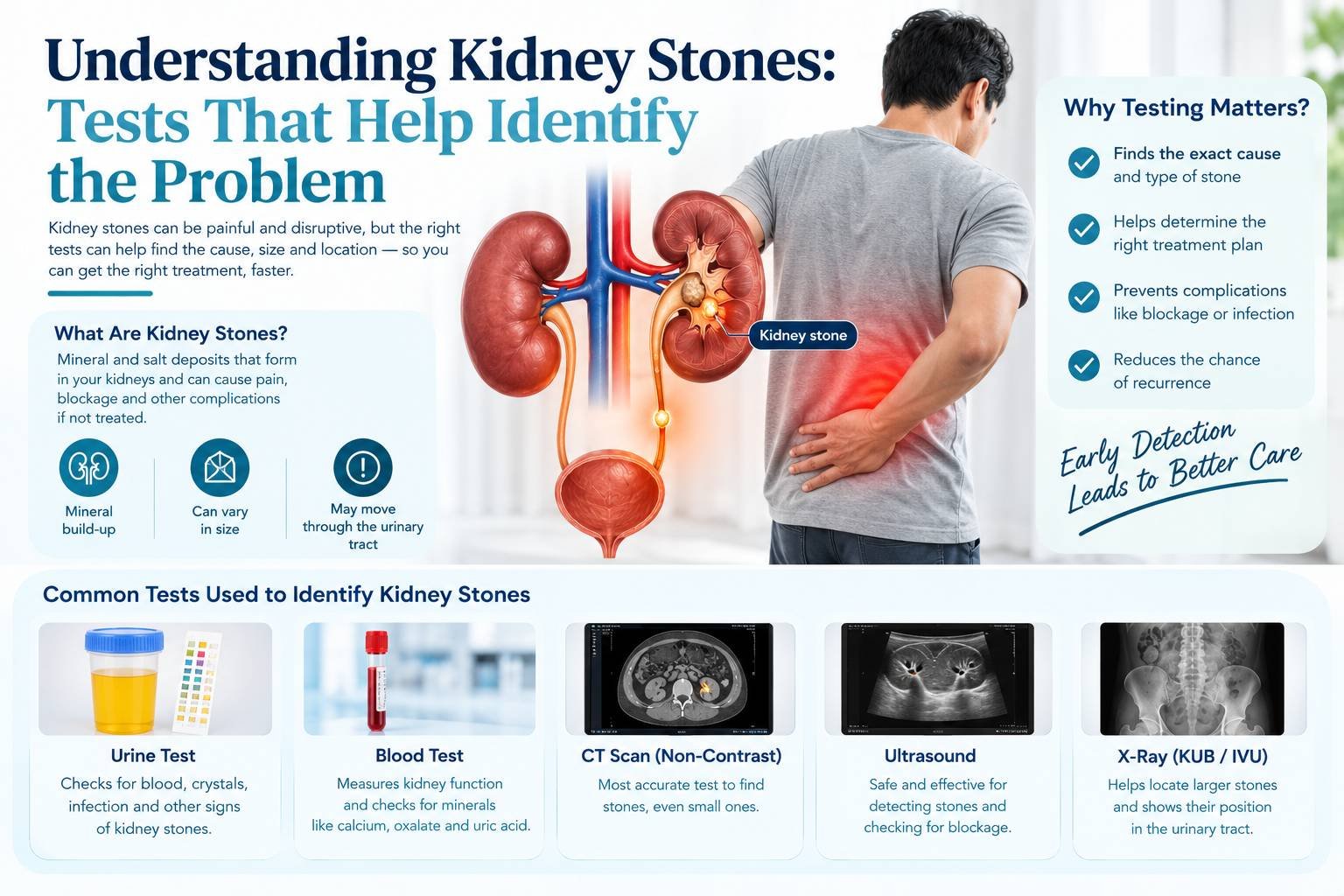
Understanding Kidney Stones: Tests That Help Identify the Problem
Kidney stones may occur when urine minerals and salts are deposited as hard deposits within the kidneys. Certain stones are natural and others are very painful, leading to urinary complications or complications that may need medical intervention. Early detection of the problem assists the doctors to know the size of the stone, its location, and the potential impact on kidney functioning.
Different tests reveal different aspects of kidney health. Learning the mechanics of these investigations can assist patients to prepare to meet with doctors and understand why a doctor might suggest more than a single test.
Start With the Symptoms: What Is Your Body Telling You?
A full body checkup delhi ncr may include routine kidney health assessments, but suspected kidney stones often require targeted investigations. The typical symptoms are acute pain in the back or side, pain that extends to the groin, blood in urine, nausea, and frequent urination.
Not all people have observable symptoms. Certain stones are not detected until they move or block the urinary tract. Physicians thus take into account symptoms, medical history, and physical examination results prior to determining the type of tests to be used.
Which Tests Help Identify Kidney Stones?
The following guide explains the main investigations doctors may use and the information each test provides.
Test
What It Helps Identify
Urinalysis
Blood, infection indicators, urine acidity, and certain crystals
Blood tests
Kidney function, calcium levels, and other metabolic factors
Ultrasound
Some kidney stones, swelling, and possible blockages
CT scan
Stone size, location, and urinary tract obstruction
Stone analysis
The mineral composition of a collected stone
24-hour urine test
Factors that may contribute to recurring stones
Doctors choose tests according to symptoms, medical history, and clinical needs. Not every patient requires every investigation.
Urinalysis: Looking for Clues in Your Urine
A full body checkup in delhi ncr may include urine testing, depending on the package. Urinalysis is a test of a urine sample to determine the presence of blood, infection, acidity, and other abnormalities that may contribute to the explanation of urinary symptoms.
Nevertheless, urine testing cannot be used to reliably identify all kidney stones or indicate their precise location. If symptoms strongly suggest a stone, the doctor may recommend imaging to investigate further.
Blood Tests: Checking Kidney Function
Blood tests give data on the quality of the functioning of kidneys and the possibility of some substances to cause stones. Depending on the situation, doctors may check creatinine, electrolytes, calcium, and uric acid.
A full body checkup delhi may include some of these measurements, but normal blood results do not rule out kidney stones. The findings should be interpreted in combination with urine results, symptoms, and imaging where needed.
Imaging Tests: Finding the Stone
Ultrasound uses sound waves to create images of the kidneys and urinary tract. It is able to detect certain stones and obstruction indicators without subjecting patients to ionizing radiation. But there are small stones or stones in some places that can be overlooked.
CT scans are more detailed and may assist the doctor to identify the size and exact location of a stone. A noncontrast CT scan is commonly used for adults when detailed assessment of suspected kidney stones is necessary. The doctor weighs its benefits against radiation exposure when selecting the appropriate test.
If Stones Keep Returning: Investigating the Cause
Individuals with recurrent kidney stones might require further tests to know the reasons behind their formation. In case a stone is passed naturally, a physician might request the patient to collect it to be analyzed in the laboratory. Knowing its composition can help guide prevention strategies.
A 24-hour urine test can also be prescribed. It quantifies the amount of urine and the presence of calcium, oxalate, citrate, and uric acid, which can determine the factors that may predispose to future stones.
How to Prepare for Your Medical Evaluation
Prior to an appointment, record the onset of symptoms, the location of the pain, and whether you have experienced any changes in urination. Disclose past stones, drugs, underlying conditions, and family history to your doctor.
A full body checkup in delhi may be useful for assessing selected health markers, but suspected stones may require ultrasound, CT imaging, or specialized urine testing. Preparation varies by test, so follow the instructions of your clinician regarding preparation, including fasting and other precautions.
When Should You Seek Urgent Care?
Emergency care is needed in case of suspected kidney stones in combination with fever, chills, persistent vomiting, severe pain, or difficulty in passing urine. A stone that obstructs the urinary tract and is accompanied by an infection may turn into a severe medical emergency.
These warning signs should not be ignored until a regular screening appointment. Early diagnosis assists in determining the presence of complications and the need to receive urgent treatment.
Conclusion
Diagnosis of kidney stones may involve a combination of symptom evaluation, urine and blood analysis, and relevant imaging. Every investigation gives various data, including kidney activity and signs of infection to the dimensions and position of a stone. Early medical assessment assists physicians in prescribing the right treatment and formulating prevention measures depending on the needs of the patient.
Ready for clearer vision? Book your appointment today with our expert eye care team!